
Create a Healthy Affiliate Program in 7 Steps (Expert Insights)
Here’s how to deliver results and sustainable growth when you’re about to start with affiliate marketing.

If your affiliate program:
- Isn’t growing
- Struggles to attract and keep quality partners
- Or is overly reliant on a few affiliates
…then you may be building an unhealthy affiliate program.
On the flipside, if you’re ready to create an affiliate program that drives long-term predictable revenue—this guide is for you.
We ran a webinar about creating a healthy affiliate program with affiliate experts Alejandro Albi (the CRO at Trackdesk), Stefan Paul Muehlbauer (Affiliate Manager at Masters in Cash), and Viktorija Ratomskė (the Co-Founder & CEO at PartnerGap).
They found that a massive 80% of affiliate programs are “unhealthy”. Yikes.
To help you avoid becoming another statistic, I put together this guide.
Below, I combine the expert insights from the webinar with everything we’ve learned helping thousands of companies build, maintain, and scale their affiliate programs with Trackdesk.
Let’s dive in!
Step 1: Establish Active, Intentional Management
The most reliable predictor of a successful affiliate program is that someone is actively managing it every day.
Viktorija, the CEO of PartnerGap, stated that a major misconception is treating affiliate marketing as a "cliché set it and forget it kind of a channel," when it requires constant work.
I can personally attest to this after becoming the #1 affiliate partner for Outdoorsy, an RV rental company. My blog, The Wandering RV, drove over $50,000 in sales to Outdoorsy every month, reaching over 270,000 visits per month at its peak.
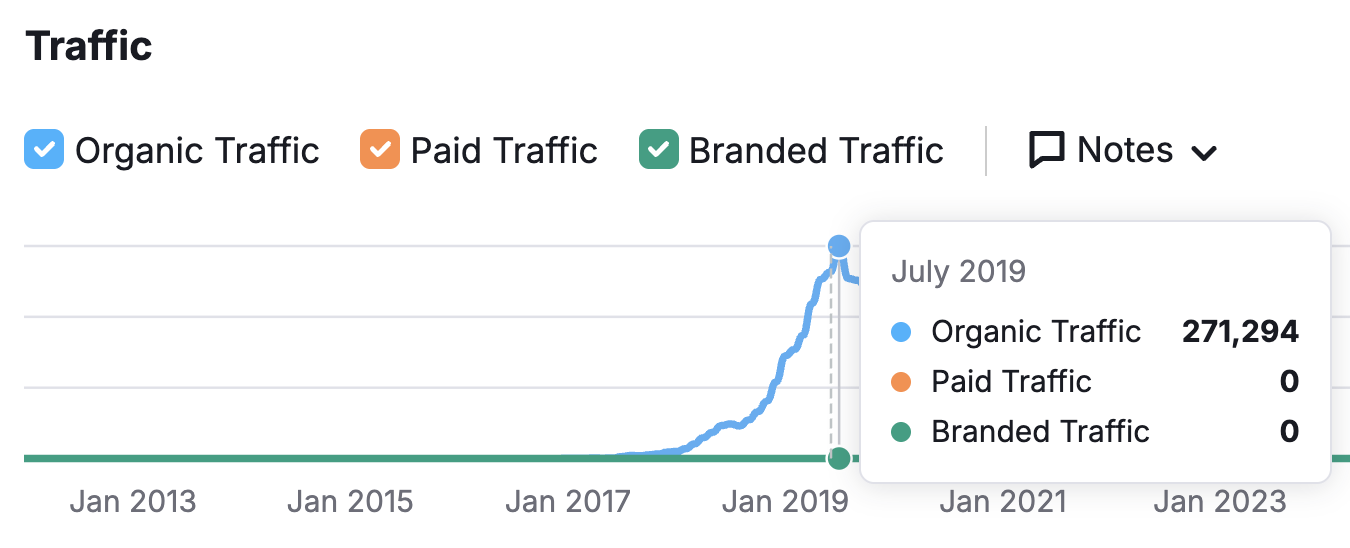
The biggest reason for my success? Austin, Outdoorsy’s dedicated affiliate manager.
When I first joined the program, Austin walked me through the process of getting set up and he answered all of my questions personally. He didn’t spend a ton of time with me, but the couple interactions we had made me feel seen and appreciated.
As the traffic I sent to them grew, Austin and I started working more closely together. He became something of a partner rather than just another company’s manager. We came up with marketing strategies together and he helped me hit revenue goals.
It was a dream combination—until it wasn’t. COVID hit in 2020, and Outdoorsy panicked.
They fired Austin, and gave his duties to someone else in the company who already had a full-time role. This other guy did not have the time or expertise to handle these new duties, and my messages would go weeks or even months without a response.
As their #1 partner, I was extremely upset. Not only did they fire the guy who helped me bring them over $1M in revenue, they stopped responding to me entirely.
The result? I switched to promoting their competitor, RVshare.
RVshare wasn’t great, but they would at least respond to me in a timely manner. I took a slight revenue hit, but it was worth the peace of mind knowing I had support when things went wrong.
This went on for nearly a year and likely cost Outdoorsy almost $500,000 in revenue.
Eventually, they re-hired Austin and I came back to them. That is the power of a dedicated manager to oversee the success of a program.
Here’s what to know:
- Assign a Dedicated Manager: A program that isn't managed is just a tool that may eventually do more damage than good. If you cannot hire a full-time internal manager, consider a consultant or agency.
- Involve Leadership: Programs tend to be healthier when owners or founders are involved, as they are more careful with the company's money and can provide the necessary long-term vision.
- Avoid Giving Managers "Grunt Work": Ensure your affiliate managers focus on building relationships rather than manual data entry or administrative tasks, which can be automated or handled by assistants. Give them the resources to create true partnerships.
If you need help finding a dedicated manager, check out Trackdesk’s Partnership Manager Marketplace where you can find and connect with experienced affiliate managers.
Step 2: Choose the Right Affiliate Tracking Software
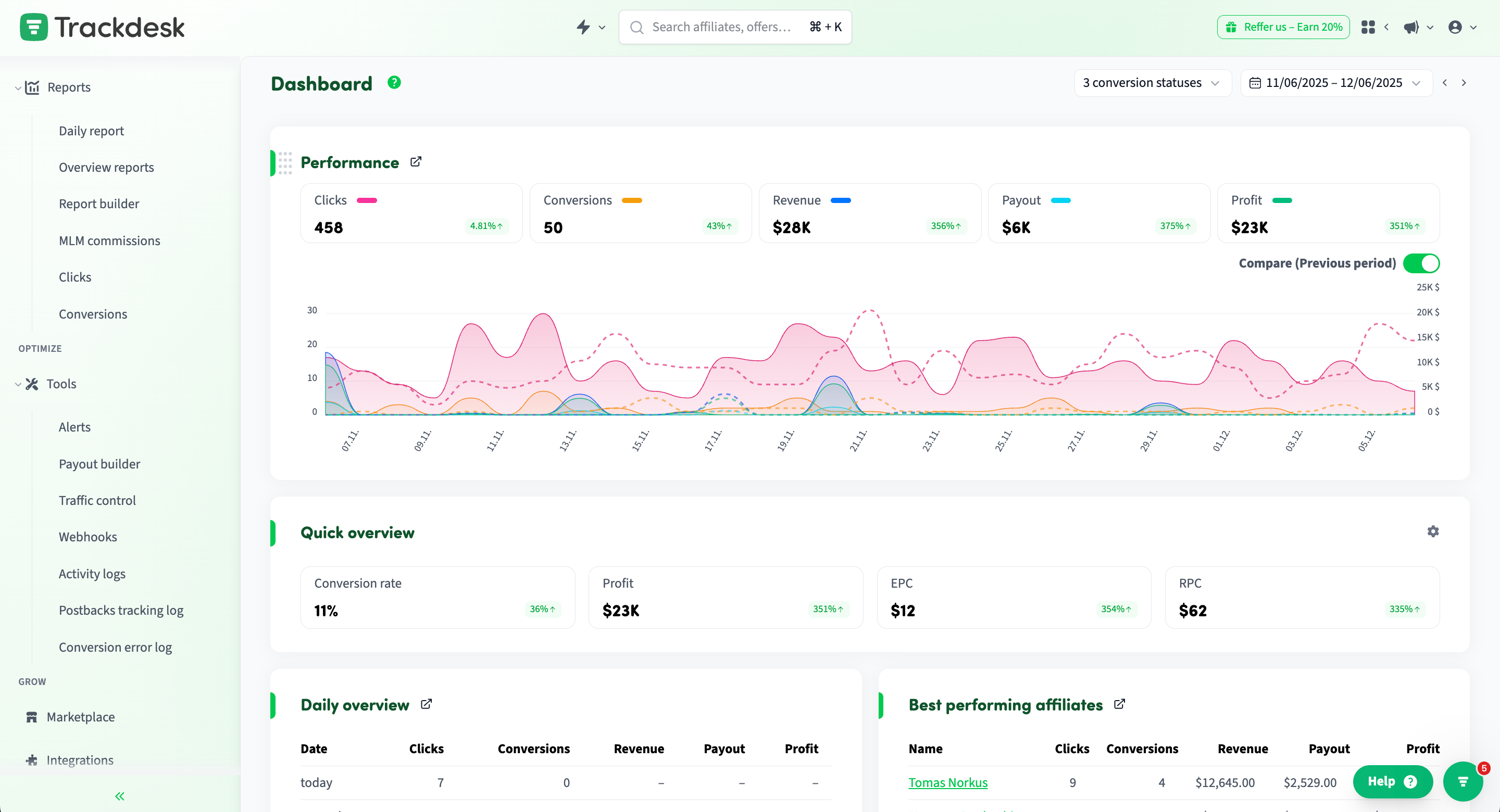
Your tracking platform is the foundation of your affiliate program. If tracking breaks, trust breaks—and so does your program.
As Stefan warned in the webinar, a program can go from healthy to “super ill overnight” if its technology can’t keep up. No amount of relationship-building can compensate for broken or outdated tracking.
The right affiliate tracking software will:
- Ensure reliable, accurate tracking: Your software should support modern affiliate requirements like postbacks, APIs, and real-time reporting.
- Provide data transparency: Today’s top affiliates are data-driven. Clear, detailed reporting builds trust, reduces disputes, and encourages partners to invest more into your program.
- Be easy to use (for both managers and affiliates): If affiliates struggle to get links or managers waste time wrestling with the platform, growth slows. Good software removes friction so managers can focus on partnerships rather than troubleshooting, and affiliates can focus on growing the traffic they send to you rather than learning your tracking tool.
For a visual walkthrough of the entire 7-step framework, check out our video on how to build a successful affiliate program from scratch.
Viktorija shared a real-world example of a large company running multiple, disconnected affiliate platforms. Broken tracking meant it took six months just to fix attribution, stalling growth and damaging affiliate confidence in the process.
As an affiliate partner myself, I can attest to this.
I’ve worked with nearly a dozen different affiliate tracking softwares. And I can tell you that the ones with attractive, intuitive UIs made my life easier, drew me back to them, and allowed me to make those companies more money.
Step 3: Conduct Market & Competitive Research
Before you launch or refine your program, know the landscape. A healthy affiliate program is built by studying what’s already working—then doing it better.
At its core, affiliate competitor analysis answers the question: why should an affiliate promote you over a competitor?
Here are five quick steps to figure out your own answer:
1. Benchmark Competitors’ Program Structure
Review your competitors’ program terms. Note key elements like:
- Commission rates (flat vs. recurring)
- Cookie durations
- Payout terms and thresholds
- What promotional tools and bonuses they offer
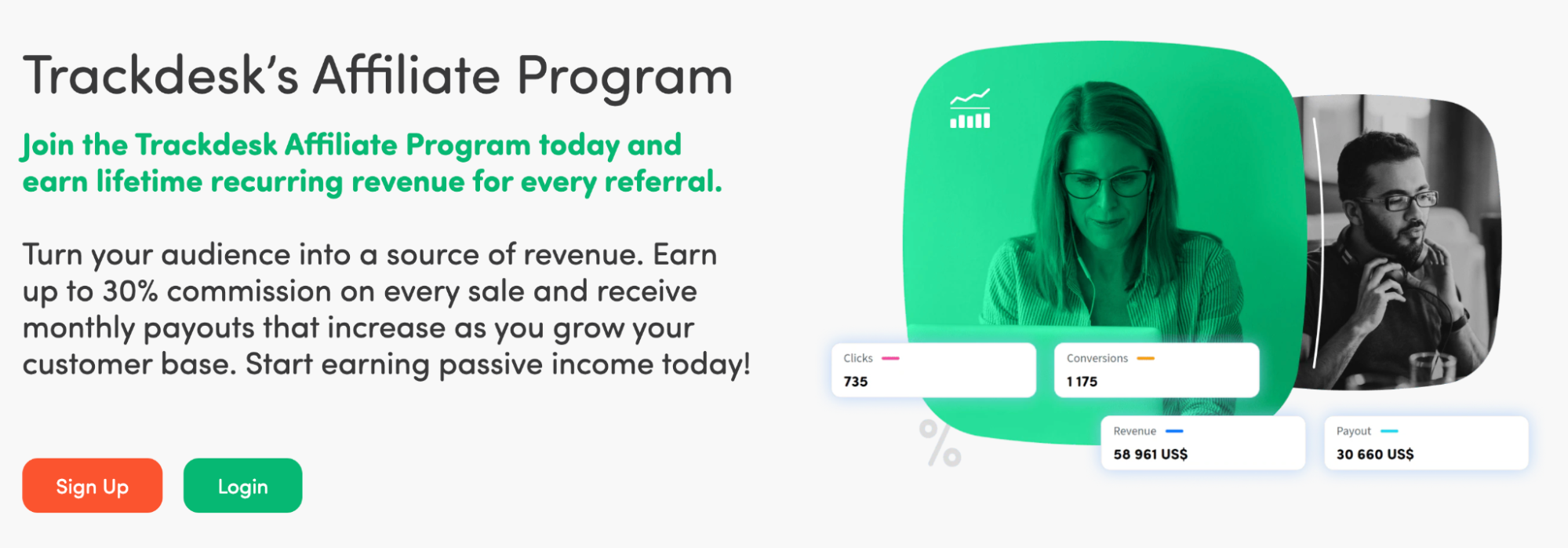
This helps you spot gaps you can exploit or match to stay competitive. Check out the Trackdesk affiliate program for an example.
2. See Who Their Best Affiliates Are
Find out who is succeeding with your competitors. Affiliates that perform well elsewhere are often open to switching, or may at least give insight into what’s working in your vertical.
To find them:
- Search Google for competitor brand terms (e.g., “[Competitor] review,” “[Competitor] alternatives,” “[Competitor] vs”) and note which blogs, creators, or sites rank repeatedly. Those are active affiliates.
- Check YouTube, TikTok, and X for “[Competitor] review” or “[Competitor] tutorial” and identify creators with links or CTAs pointing to that product.
- Use SEO tools (Ahrefs, Semrush) to see which sites link to competitor affiliate pages or rank for buyer-intent keywords tied to them.
- Look at affiliate networks/directories (OfferVault, PartnerStack marketplace, Impact directory) to see which affiliates publicly promote those offers.
- Read comments and disclosures (“This post contains affiliate links”) on top-ranking content. It’s often explicitly stated.
3. Evaluate Strengths & Weaknesses
Study how easy it is to join their program, what affiliates say about them, and whether their offer genuinely delivers value. Understanding both strengths and complaints gives you positioning leverage.
For example, let’s say you run a project management software. Here’s what you’d do:
- Google a competitor, using keywords like “Asana affiliate program” and “Asana affiliate program review”.
- Click a few ranking blog posts and YouTube reviews. You notice:
- Multiple affiliates complain that approval takes weeks
- Comments mention low commissions (5–10%)
- Several creators say payouts are slow or unclear
- You then try joining the program yourself and notice:
- The signup form is long and confusing
- There’s no clear onboarding email
- No one reaches out personally after approval
You can use these notes for step 5.
4. Position Your Program to Stand Out
Use what you’ve learned to make strategic choices that attract affiliates:
- Better commission structure
- Longer cookie windows
- Clear, compelling messaging
- Easier onboarding and support
Following our previous example of the project management software, we can use these insights to make the following decisions:
- Launch the program with 20% recurring commission (higher than the 5-10% of competitors)
- Instant or fast manual approval as opposed to weeks
- A simple signup and clear onboarding email
- A personal welcome message from an affiliate manager
- Faster, transparent payouts
These advantages make your program far more attractive than your competitors, potentially causing them to switch—just like I did with Outdoorsy and RVshare.
Step 4: Create a Seamless Affiliate Onboarding Experience
First impressions matter—a lot. Many otherwise solid affiliate programs lose high-quality partners simply because the onboarding experience is slow, confusing, or broken.
As Stefan emphasized in the webinar, onboarding is often the single easiest place to fix a struggling program, yet it’s where many companies fail.
What a Great Onboarding Experience Looks Like
A great affiliate onboarding experience begins with fast, human follow-up, a simple and functional setup, and clear first steps.
Have a real person reach out quickly to:
- Introduce themselves
- Understand the affiliate’s traffic sources & goals
- Help them set up their account
- Guide them to their first next step
This early interaction sets the tone for the entire relationship and signals that your program is actively managed—something I learned firsthand during my time as a top-performing affiliate.
Affiliates should be able to log in easily, find their tracking links immediately, and understand what to promote without confusion.
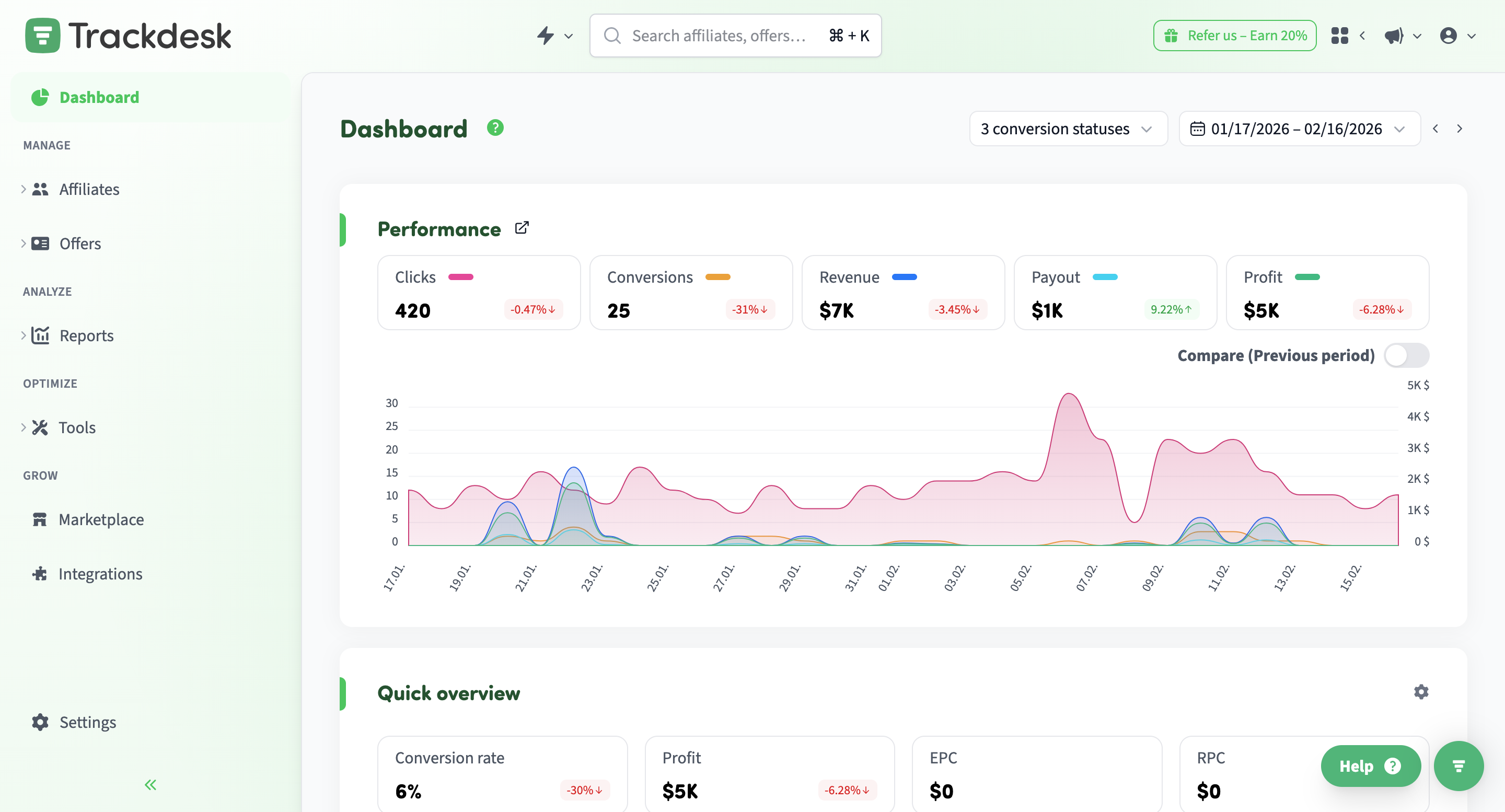
During the webinar, Stefan shared multiple “horror stories” of programs where affiliates were approved, but literally couldn’t find a login button or access their dashboard. In some cases, this single issue completely stalled otherwise promising partnerships.
Affiliates should know:
- What should I promote first?
- Where do I find my links and assets?
- Who do I contact if something breaks?
If an affiliate can’t get started in minutes, not hours, you’re creating unnecessary friction.
Step 5: Prioritize Relationships Over Numbers
A large affiliate list might look impressive, but a healthy affiliate program is built on active, trusted relationships—not raw signup counts.
As both speakers emphasized in the webinar, over-optimizing for numbers is one of the fastest ways to create a fragile, unhealthy program.
The Human Factor Matters More Than Metrics
Strong affiliate managers treat affiliates like real partners, not traffic sources.
Viktorija put it bluntly during the webinar: to build a solid connection, managers should “know affiliates’ kids’ names, dogs’ names, birthdays—everything.”
That level of care shows up in:
- Proactive communication about new products
- Early notice of promotions like Black Friday
- Transparency when issues arise
Affiliates who feel seen and supported are far more likely to scale traffic and stick around long term.
Treat Your Top Partners Differently (Because They Are)
Not all affiliates are equal. And that’s okay.
Healthy programs reward their best partners with:
- Exclusive deals or higher commissions
- Early access to new creatives or offers
- Priority support and faster responses
I’ve experienced this firsthand. When Outdoorsy treated me like a true partner, working with me on strategy and helping me hit revenue goals, I gladly prioritized them.
When that support disappeared, I switched to RVshare. Later, when Outdoorsy rehired a dedicated manager and rebuilt the relationship, I came back. That’s how powerful strong affiliate relationships can be.
Stop Chasing Vanity Metrics
During the webinar, Stefan criticized the obsession with surface-level numbers, joking about bosses who demand proof of value through business cards:
“Stefan, you’re back from the conference—how many business cards? What, only 30? I sent your ass to Bangkok!”
Raw counts don’t equal quality. One strong, motivated affiliate can outperform dozens of disengaged ones. Just as I sent far more traffic to Outdoorsy than 99% of their other affiliates.
Be a Trusted Consultant—Not Just a Manager
Citing advice from Google Media, Stefan shared a powerful framing:
The affiliate manager should be the “trusted consultant of the affiliate.”
That means helping affiliates succeed, even when it requires honest conversations about payouts, traffic quality, or long-term strategy.
Always Stay Diplomatic
One of the strongest rules echoed throughout the webinar: Never be aggressive. Never be negative. Always stay diplomatic.
Even if a deal doesn’t work out today, that affiliate may become a top partner tomorrow. Burning bridges in affiliate marketing is almost always short-sighted.
The bottom line is that healthy affiliate programs aren’t built by chasing volume, they’re built by nurturing relationships.
When you prioritize trust, communication, and long-term partnership over vanity metrics, your affiliate program becomes harder to break and much easier to scale.
Step 6: Choose & Monitor the Right Affiliate KPIs
In the words of Peter F. Drucker, what gets measured, gets managed. Your affiliate program is no exception.
The goal isn’t to track everything, but to consistently watch a small set of indicators that reveal whether your program is growing or slowly deteriorating.
As discussed in the webinar, most “unhealthy” programs don’t fail suddenly. They decay slowly while teams look at the wrong numbers, or worse—they don’t look at them at all.
The KPIs That Actually Matter
The Key Performance Indicators (KPIs) that actually matter with affiliate marketing include:
- Active affiliate count: Track how many affiliates are actively driving conversions month over month, not total signups. If your active affiliate count is declining, it’s a major red flag that partners are disengaging, frustrated, or leaving for better programs.
- ROAS (Return on Ad Spend): Affiliate marketing is an investment. Regularly calculate how much revenue you’re generating for every dollar spent on commissions. If ROAS is slipping, it often points to poor traffic quality, weak segmentation, or commission structures that no longer make sense.
- Affiliate Segmentation: Healthy programs are diversified. Unhealthy ones are fragile.
If 80% of your revenue comes from a single affiliate, your program is exposed. One relationship change, payout dispute, or platform shift can wipe out months of growth. You saw what happened with Outdoorsy when they lost me.
Strong segmentation spreads revenue across multiple reliable partners instead of relying on one outlier.
What the Data Reveals in the Real World
Viktorija shared that her conclusions come from auditing 70 different brands across multiple verticals in a single year. One recurring pattern in unhealthy programs was poor segmentation, where one affiliate drove nearly all revenue while dozens of others contributed almost nothing.
In one case, over 90% of active affiliates were low-quality coupon sites.
By removing underperforming partners and onboarding more stable traffic sources, the program dramatically improved ROAS and long-term sustainability.
Metrics don’t just tell you how your affiliate program is performing; they tell you where it’s fragile.
Early Warning Signs BEFORE Metrics Drop
Stefan's key insight was that affiliates complaining is the first indicator—before revenue or active counts decline.
- "The system is down"
- "landing pages are trash"
- "payout delayed"
- "third manager change this year"
These are all warning signs that show up before KPIs move.
By monitoring active affiliates, ROAS, and segmentation, you can spot problems early, make smarter decisions, and keep your program healthy as it scales.
Step 7: Maintain Professional Financial Operations
A program cannot be healthy if its financial plumbing is clogged. Even strong relationships and great performance will eventually break down if payouts, accounting, or payment processes aren’t handled professionally.
As discussed in the webinar, financial reliability is table stakes in affiliate marketing.
Pay Affiliates on Time—Every Time
Late payouts are one of the fastest ways to lose good affiliates.
I’ve experienced this firsthand. When Outdoorsy delayed payments and communication broke down, it created uncertainty and frustration. Even though the revenue hit wasn’t ideal, I chose stability and responsiveness over slightly higher earnings. Affiliates make the same decision every day.
If affiliates can’t trust your payment schedule, they won’t prioritize your program, no matter how good your offer looks on paper.
Offer Flexible Payment Methods
Affiliate programs are global. Your payment options should be too.
Healthy programs are prepared to pay affiliates via:
- Bank transfer
- PayPal
- Alternative methods like crypto
During the webinar, Stefan shared that crypto payouts can be especially effective for international partners, such as Indian affiliates, who may not have traditional bank accounts. In these cases, crypto removes friction and allows affiliates to get paid quickly and reliably.
Keep Your Accounting Clean
Affiliate payouts aren’t just a relationship issue, they’re an accounting one.
All commissions should be:
- Properly documented
- Paid through approved business channels
- Deductible as legitimate business expenses
As Stefan bluntly put it: if a company can’t properly account for and deduct affiliate payouts, it is not a healthy affiliate program. Financial chaos behind the scenes eventually leaks into delayed payments, disputes, and broken trust.
Affiliate marketing runs on trust, and trust is reinforced through consistent, professional financial operations.
Wrapping Up: Avoid These Common Affiliate Program Mistakes
Most unhealthy affiliate programs fail for the same few reasons, many of which were repeatedly called out in the webinar:
- Treating affiliate marketing as “set it and forget it”: If no one actively manages your program every day, it will slowly decay. Unanswered messages, broken tracking, and disengaged affiliates are inevitable.
- Relying on one affiliate or one channel: Programs that depend on a single top partner or traffic source may look strong, but they’re fragile. When that partner leaves, revenue disappears overnight.
- Ignoring tracking and onboarding issues: Broken tracking, confusing dashboards, or slow approvals destroy trust. Several webinar “horror stories” showed how affiliates gave up simply because they couldn’t log in or get started.
- Chasing vanity metrics instead of real performance: Total signups, business cards, and raw affiliate counts don’t matter. Active affiliates, ROAS, and diversification do.
- Neglecting relationships and professionalism: Affiliate marketing is still a relationship business. Programs that treat affiliates like disposable traffic sources see higher churn and lower performance.
- Creating financial friction: Late payouts, limited payment options, or poor accounting practices drive good affiliates away. Financial reliability isn’t optional, it’s foundational.
If you avoid these mistakes and follow the seven steps in this guide, you create an affiliate program that drives consistent, scalable profits.
Create Your Healthy Affiliate Program Today
Get your 14-day free trial of Trackdesk today and see why over 3,000 businesses trust us to run their affiliate program with ease.
- Reliable, accurate tracking with postbacks, APIs, and real-time reporting affiliates trust.
- Affiliate-friendly dashboards that make it easy for partners to grab links, track performance, and scale.
- Flexible payouts that support global partners (bank transfer, PayPal, and more).
- Powerful management tools for segmentation, fraud prevention, and performance optimization.
- Built to scale from your first affiliate to thousands, without breaking workflows or trust.


Bill is a serial entrepreneur, business coach, affiliate marketer, and copywriter with a passion for creating content. When he's not busy beating the Google algorithm, you can find him hiking with his dog, at the gym, or singing karaoke.


